How return air picks up odor
A forced-air system pushes conditioned air out through supply ducts and pulls the same amount back through return ducts. Returns are under negative pressure, so any gap in them sucks in air from wherever the gap is. If that gap sits in an unfinished basement corner, a crawl space or a wall cavity, the furnace mixes that air into the whole house.
Many older homes in Hilltop, Mayfair and Crestmoor use panned joist returns: instead of a sheet-metal duct, a joist bay is closed off with a thin metal panel on the bottom and used as a duct. The edges were rarely sealed. These cavities can pull air from the rim joist area, from inside walls, and in homes with additions, from a crawl space that connects to the basement framing.
The pattern to watch for is timing. If the smell upstairs gets noticeably stronger a few minutes after the system starts, and fades when it shuts off, the air system is moving odor rather than creating it.
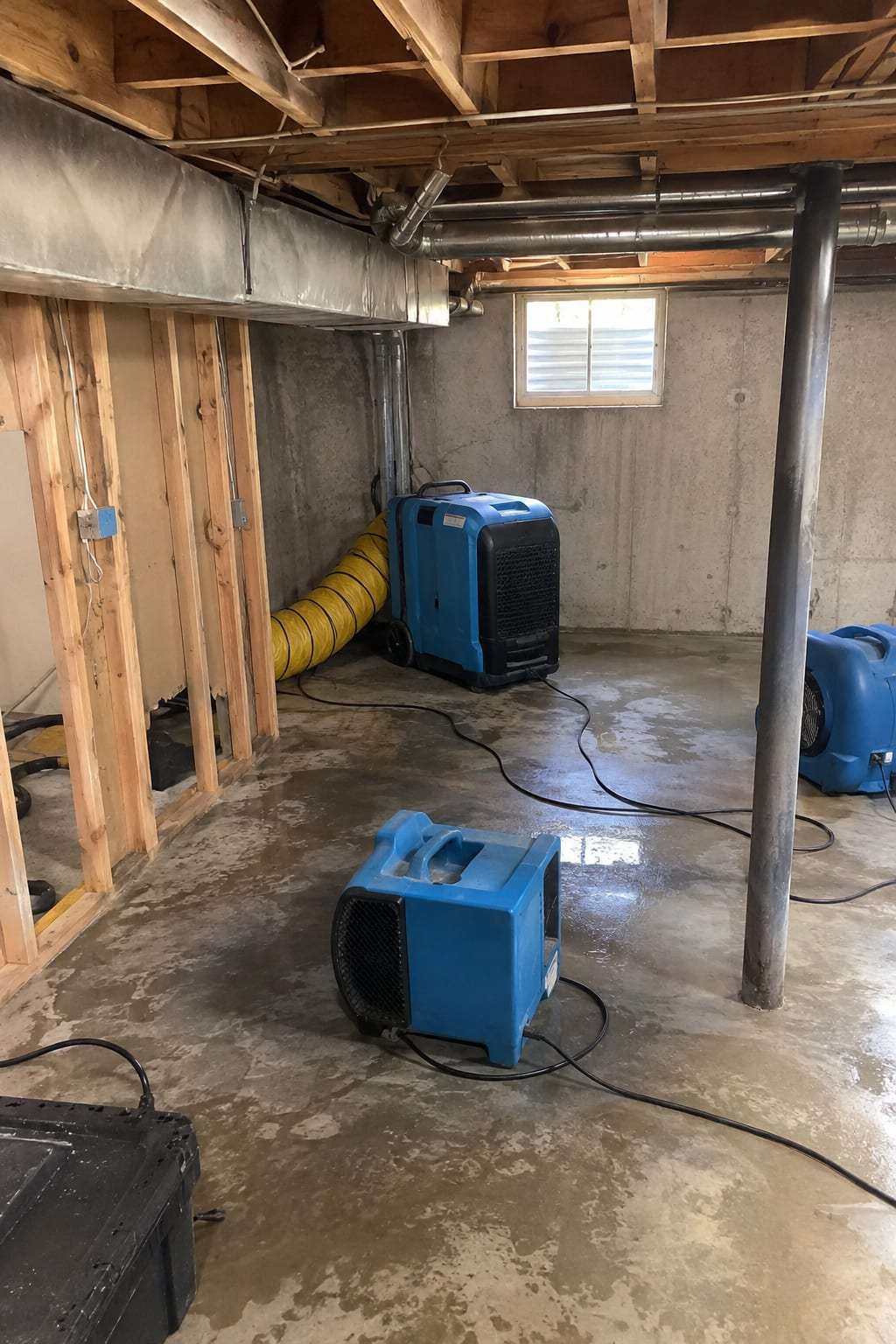
Things to look at around the air handler
Turn the system off at the thermostat before opening any panels.
- Find the return duct where it connects to the furnace or air handler. Look for gaps, missing tape or a filter slot without a cover.
- Follow return ducts and panned joists with a flashlight. Look for dirt streaks, which form where air has been leaking in.
- Check whether the mechanical room door is louvered and whether the room has its own return grille drawing from a dirty, damp space.
- Look for a return opening in the basement near the sump pit, floor drain or a crawl space access.
- In homes with additions, see whether any duct passes through the crawl space under the addition.
- Check the filter. A clogged filter doesn't cause odor by itself, but it shows how long since the system was serviced.
Return leak locations and what they bring in
| Leak location | Air it pulls in | Typical smell |
|---|---|---|
| Panned joist edges near the rim | Air from behind the foundation sill | Dusty, musty, sometimes mouse-like |
| Return opening in mechanical room | Air near water heater, sump and drains | Sewer or stagnant water |
| Duct through a crawl space | Crawl space air over bare soil | Earthy, damp |
| Open filter slot | Air right around the furnace | Whatever the basement smells like |
| Wall cavity used as a return | Air from inside framed walls | Stale, dusty, occasionally decay if a rodent is inside |
Common questions
Will sealing ducts get rid of the smell?
It stops the system from spreading odor, which often helps a lot upstairs. The source in the basement or crawl space still needs to be found and fixed.
Should I have my ducts cleaned?
Cleaning can help if ducts hold debris or contamination, but sealing leaks and fixing the source usually come first. Ask what the technician saw inside before agreeing.
General information for Hilltop, not a quote or professional advice. In an emergency, call 911.